Short-run replication
Vacuum casting: production-like parts without a steel mold
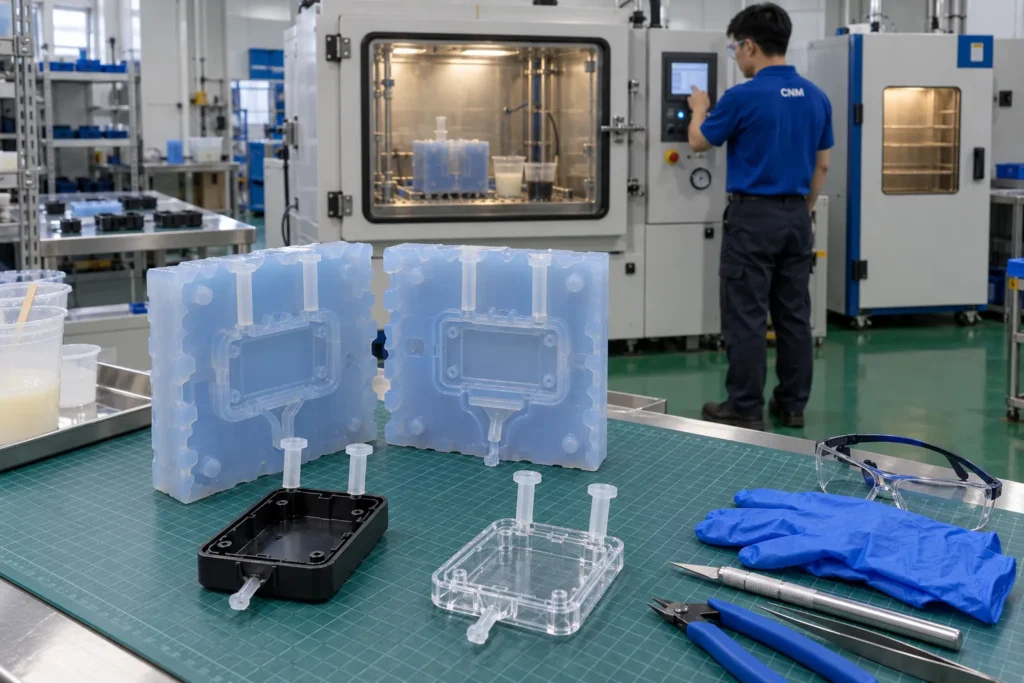
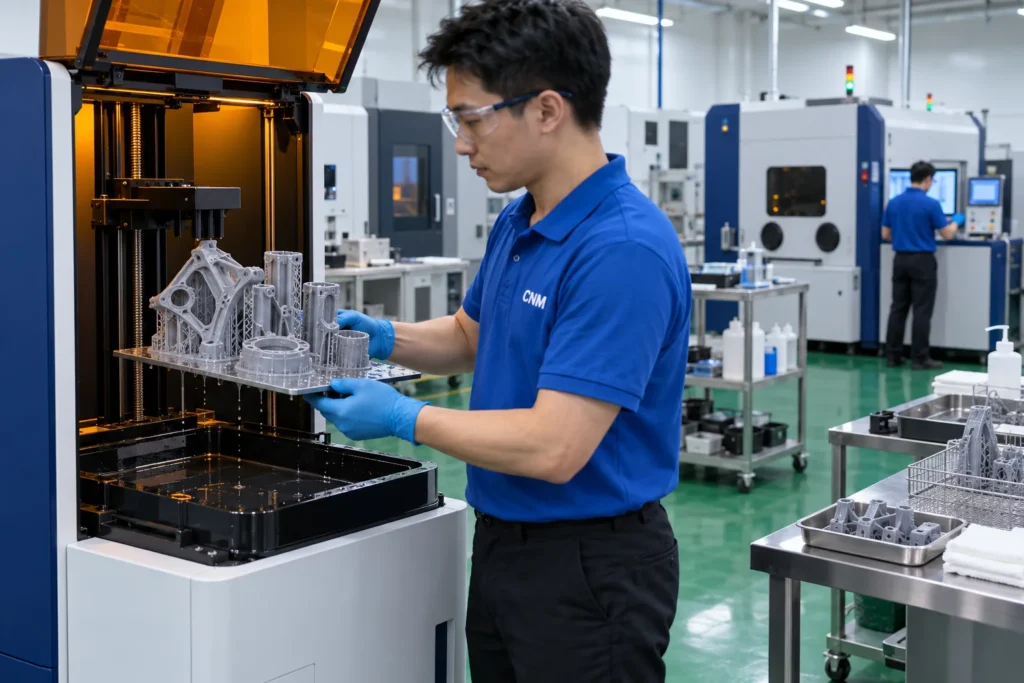
Vacuum casting copies a master pattern, usually an SLA print or a CNC machined part, into a silicone mold. Two-part polyurethane is mixed and poured under vacuum so it fills thin walls without air bubbles, then cured in an oven. The resins imitate ABS, PP, PC or rubber and can be colored or cast clear.
A silicone mold typically gives about 15 to 25 parts before it tears or loses detail, so vacuum casting suits batches of roughly 10 to 50 parts: evaluation samples, marketing samples and pilot builds before an injection mold exists.
How a vacuum casting job runs
- Make the master by SLA printing or CNC machining
- Sand and finish the master to the required surface
- Cast silicone around the master and cut the mold open along a parting line
- Mix and pour polyurethane under vacuum
- Cure, demold, remove gates and risers, then paint or texture if required
- Cast a new mold from the same master when the first one wears out
Vacuum casting at a glance (typical)
| Master pattern | SLA printed or CNC machined, finished to the required surface |
|---|---|
| Mold | Silicone, cut open along a parting line around the master |
| Part materials | Polyurethane resins: ABS-like, PP-like, PC-like, rubber-like (soft to hard Shore A grades), clear |
| Parts per mold | Typically about 15–25 parts before the mold wears |
| Batch size | Typically 10 to 50 parts |
| Accuracy | About ±0.2–0.3 mm per 100 mm, depending on resin shrinkage and part size |
Vacuum casting FAQ
How many parts can one silicone mold make?
Typically about 15 to 25, fewer for complex shapes, clear parts or resins that attack the silicone. For more parts, a new mold is cast from the same master.
Can vacuum cast parts be colored or transparent?
Yes. Resins are pigmented to a color, cast clear for transparent parts, or painted and textured after casting. Clear parts need a polished master.