Sheet metal
Custom sheet metal parts, enclosures and assemblies
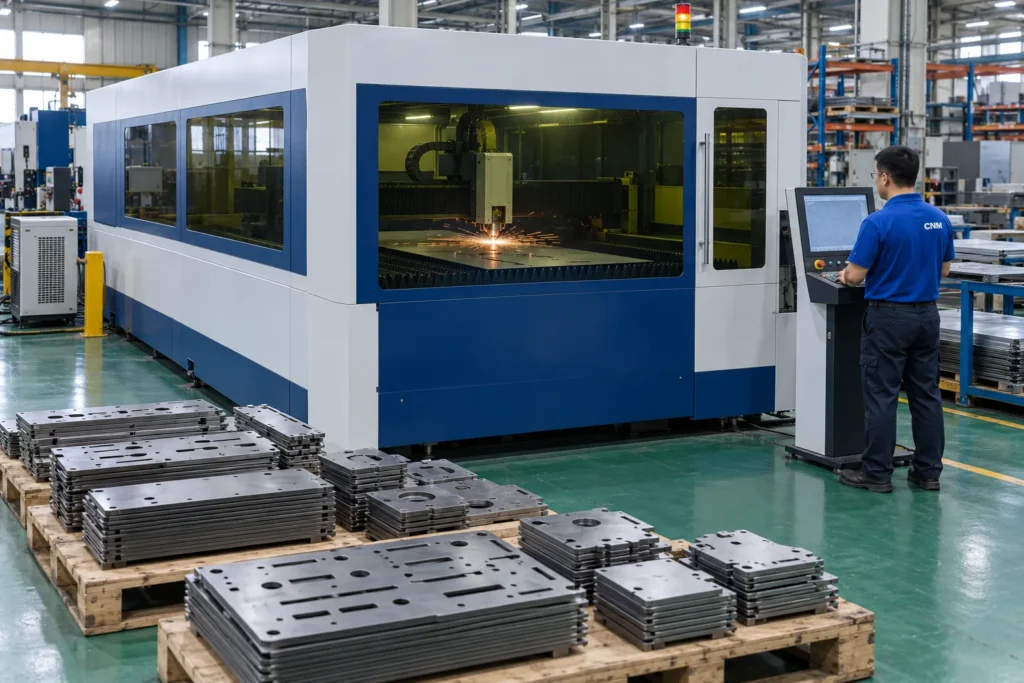
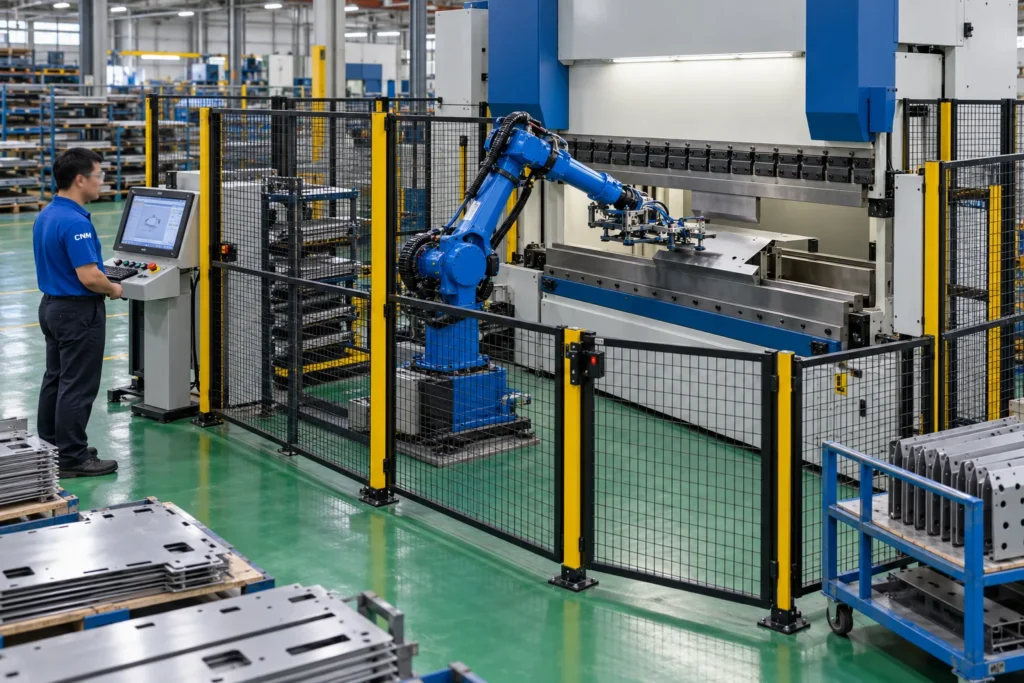
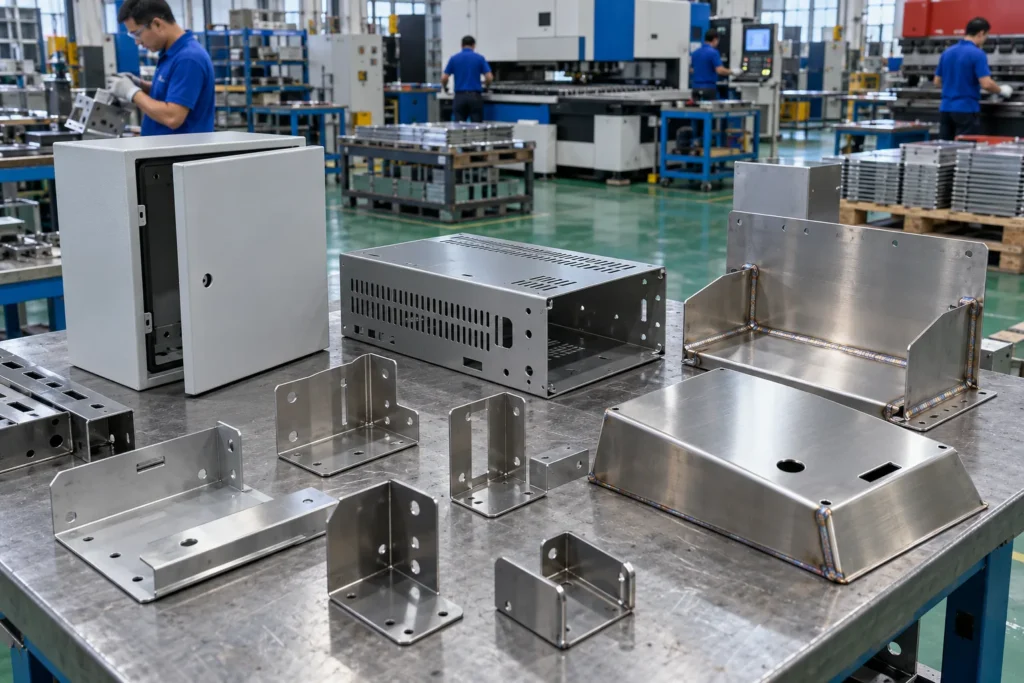
Sheet metal fabrication makes parts from flat sheet by cutting, bending and joining. For enclosures, chassis, brackets, panels and frames it costs far less than machining from solid, and it needs little or no dedicated tooling, so the same route works for prototypes and for repeat batches.
We cut blanks by laser, waterjet or plasma, form them by bending, stretch forming or roll forming, then weld, deburr and coat them. At the quotation stage we check bend radii, flange lengths, hole-to-bend distances and weld access, because that is where most sheet metal drawings need small changes.
Processes
- Laser cutting
- Waterjet cutting
- Plasma cutting
- Bending and forming
- Stretch forming and roll forming
- Welding and assembly
- Deburring, powder coating and painting
Typical sheet metal parts
- Electrical and electronic enclosures
- Chassis, racks and frames
- Brackets and mounting plates
- Covers, panels and doors
- Welded assemblies
Sheet metal fabrication at a glance (typical)
| Cutting | Laser, waterjet and plasma cutting |
|---|---|
| Forming | Bending, stretch forming, roll forming |
| Joining | Welding and mechanical fastening |
| Materials | Cold-rolled and galvanized steel, stainless steel, aluminum, copper and brass sheet |
| Inside bend radius | About 1× material thickness as a starting point; larger for hard aluminum tempers |
| Tolerances | Laser-cut features about ±0.1 mm; dimensions across a bend about ±0.2–0.3 mm; bend angles about ±1° |
| Finishes | Deburring, powder coating, painting, plating, anodizing (aluminum), passivation (stainless) |
| Typical parts | Enclosures, chassis, brackets, panels, frames, welded assemblies |
Sheet metal FAQ
What bend radius should I use?
Start with an inside bend radius about equal to the material thickness, and use the same radius on every bend so the part can be formed with one tool set. Hard aluminum such as 6061-T6 needs a noticeably larger radius or it cracks on the outside of the bend.
How close can a hole be to a bend?
A typical rule is at least 2.5 times the material thickness plus the inside bend radius, measured from the hole edge to the bend. Closer holes stretch into ovals when the part is bent.
Sheet metal or CNC machining for an enclosure?
Sheet metal is usually far cheaper for box-shaped enclosures with uniform walls. CNC machining suits small, thick-walled or highly detailed housings and very low quantities.