CNC machining
Precision CNC machined parts in metal and plastic
CNC machining cuts parts from solid metal or plastic stock. It needs no tooling and holds tighter tolerances than most other processes, so the same route serves a single prototype and a repeat batch. Our machining covers CNC milling, CNC turning and Swiss-type turning, drilling, grinding, thread rolling, routing and engraving, EDM and wire EDM.
The route for each part depends on its shape, the material condition, the datum scheme and the dimensions that matter in your assembly. We also machine castings, forgings, sheet metal and molded parts as a second operation.
Machining routes
- CNC milling: plates, housings, pockets, profiles and 3D surfaces
- CNC turning and Swiss-type turning: shafts, pins and small precision parts
- Drilling, tapping, grinding and thread rolling
- EDM and wire EDM: hardened steel, sharp inside corners, narrow slots
- CNC routing and engraving
- Second operations on castings, forgings and molded parts
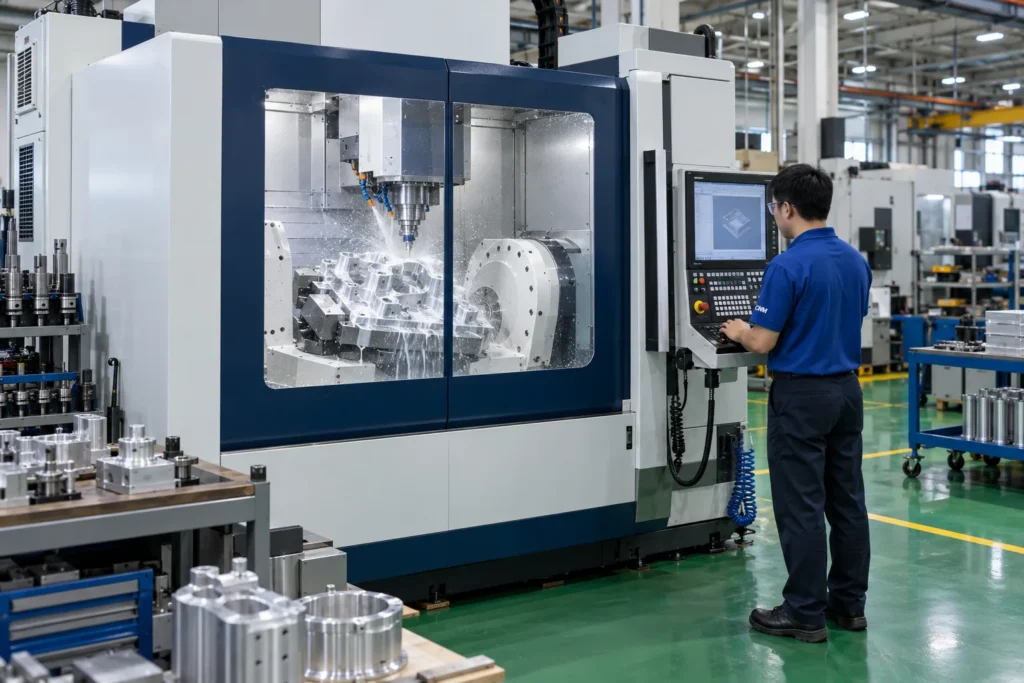
CNC milling for housings, plates, brackets, manifolds and other prismatic parts in metal and plastic.
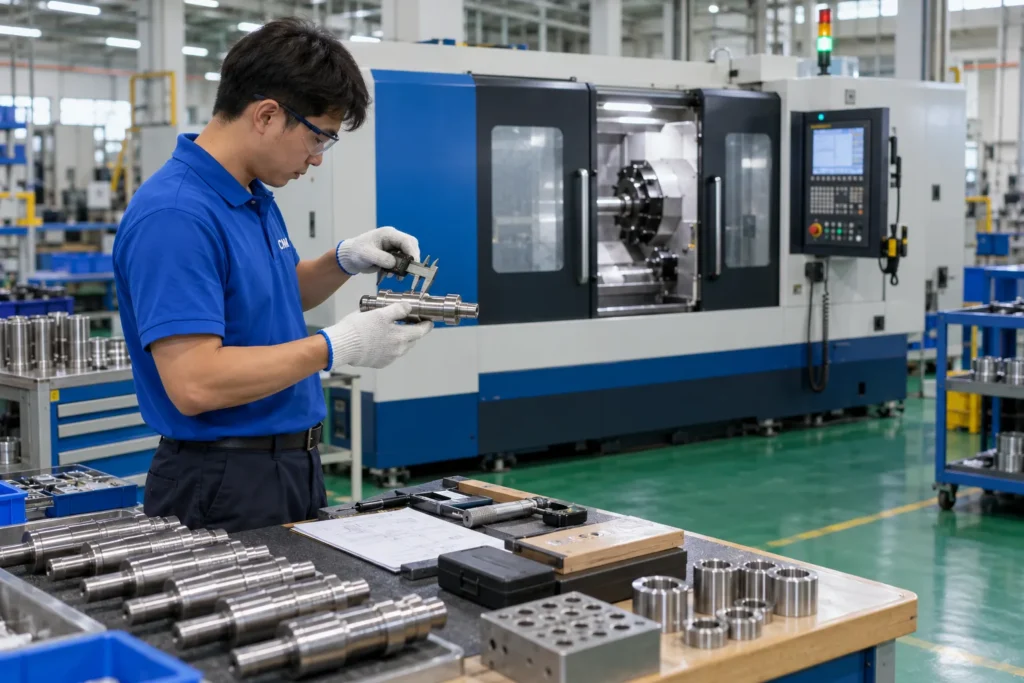
CNC turning and Swiss-type turning for shafts, pins, bushings, fittings and small precision parts.
CNC machining at a glance (typical)
| Processes | CNC milling, CNC turning, Swiss-type turning, drilling, grinding, thread rolling, routing and engraving, EDM and wire EDM |
|---|---|
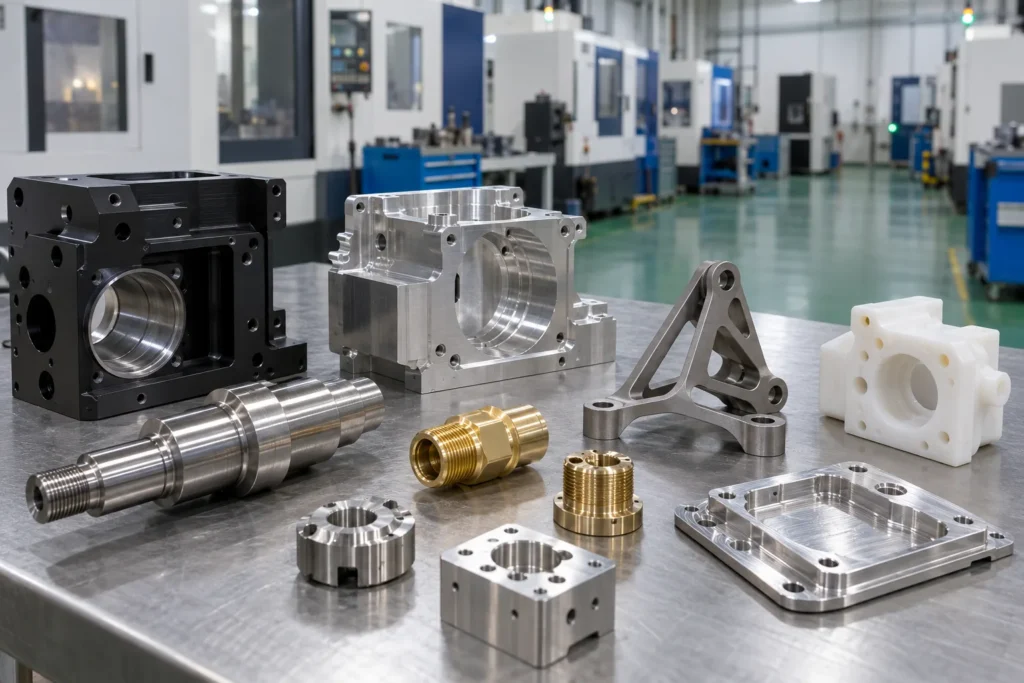
| Materials | Aluminum, stainless steel, carbon and alloy steel, tool steel, brass, copper, titanium, engineering plastics |
| General tolerance | ISO 2768-m is a common default where the drawing gives no tolerance; critical features to the tolerance on the drawing |
| Surface roughness | Ra 3.2 µm as machined is common; Ra 1.6 or 0.8 µm with finishing passes; finer by grinding or polishing |
| Finishes | Anodizing, plating, powder coating, painting, polishing, passivation |
| Quantities | Prototypes from 1 to 500+ parts, and repeat production |
| Inspection | Dimensional inspection including CMM; first article and inspection reports on request |
CNC machining FAQ
What tolerances can CNC machining hold?
Where the drawing gives no tolerance, ISO 2768-m is a common default: ±0.1 mm up to 6 mm, ±0.2 mm from 6 to 30 mm, ±0.3 mm from 30 to 120 mm. Functional features such as bearing bores are machined to the tolerance or ISO fit on the drawing. What is practical depends on material, size and geometry, so we confirm critical tolerances before quoting.
Which is better for my part, milling or turning?
Round parts such as shafts, pins and bushings are usually turned; prismatic parts such as housings, plates and brackets are milled. Many parts need both. See our guide on CNC milling vs turning.
Can you machine plastic as well as metal?
Yes. POM, nylon, ABS, PC, PMMA, PEEK and other engineering plastics are machined for prototypes and production parts. Plastics move more with temperature and clamping force than metals, so very tight tolerances on plastic parts should be discussed first.