China United Mould

Logo 2021

Rapid Tooling

Rapid tooling

Prototype molds for parts in the production plastic

Rapid tooling is a simplified injection mold, usually with aluminum or pre-hardened steel cavities, that makes real molded parts in the production resin. It is built when printed or cast parts are not close enough: fit and function tests in the real material, certification samples, pre-series builds, or bridge tooling while the production mold is being made.

Cavities and cores are machined by CNC and EDM in our tool room, and the samples are molded in our own plants, the same plants that build CNM production injection molds.

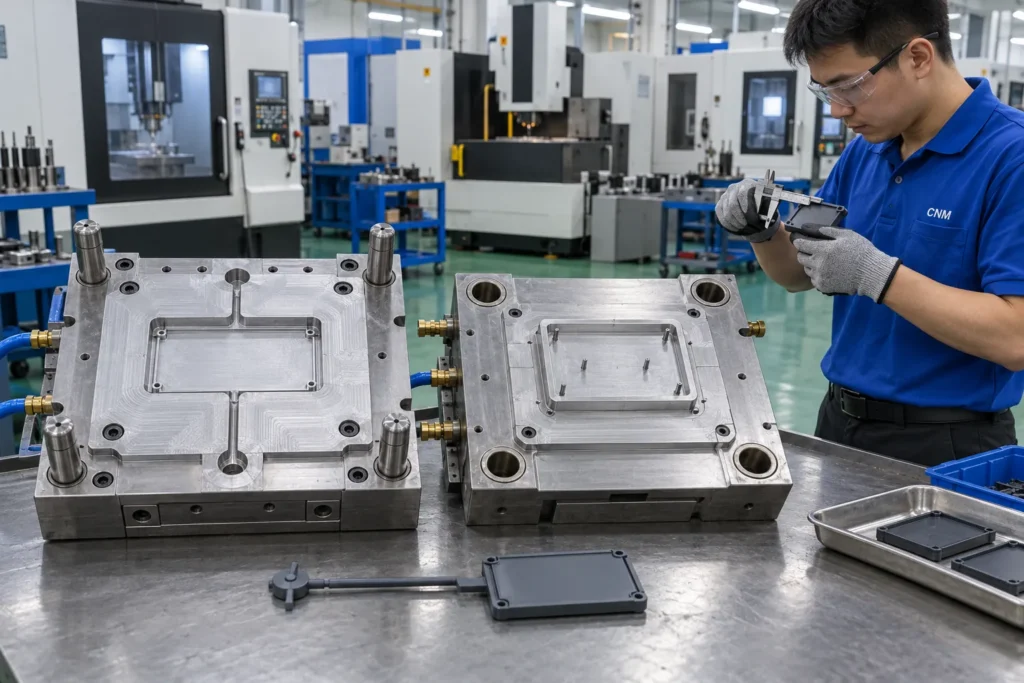
Aluminum prototype injection mold halves with first-shot sample parts
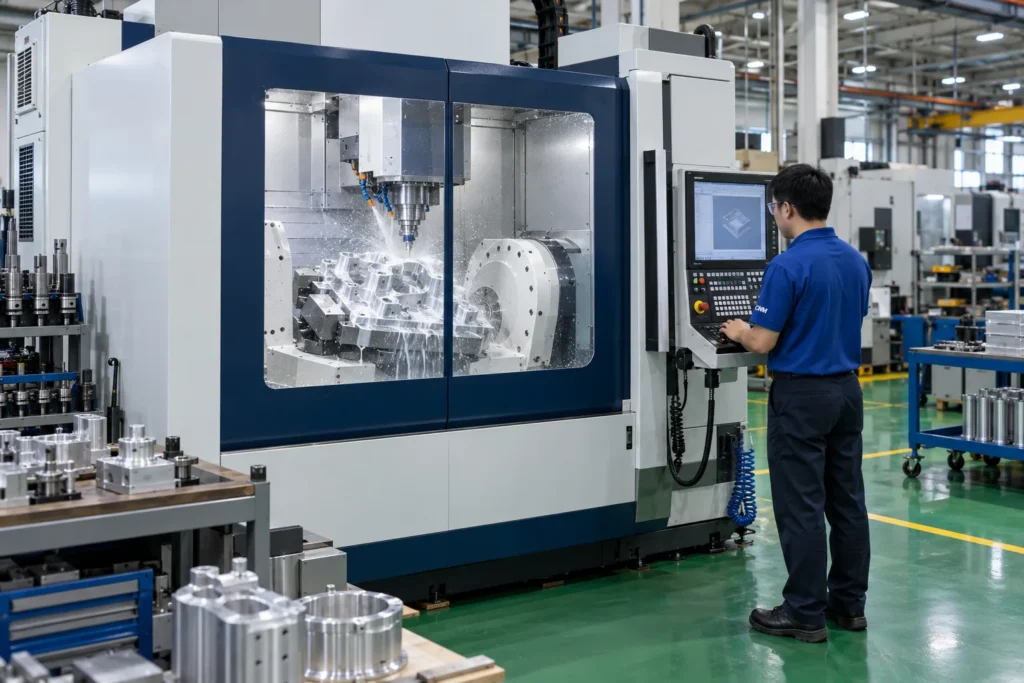
5-axis CNC machining center milling an aluminum part behind closed guard doors

When rapid tooling makes sense

Rapid tooling at a glance (typical)

Mold materialsAluminum (for example 7075) or pre-hardened steel such as P20 or 718
ConstructionUsually single cavity; hand-loaded inserts instead of slides where possible
Part materialsProduction thermoplastics such as ABS, PC, PC/ABS, PA, PP and POM
Mold lifeAluminum: typically a few thousand to about 10,000 shots, fewer with glass-filled resins; pre-hardened steel: typically tens of thousands of shots
Typical useValidation samples, pre-series, bridge production, low lifetime volumes

Rapid tooling FAQ

How is rapid tooling different from a production mold?

A rapid tool uses softer, faster-to-machine cavity materials and simpler construction, so it is quicker and cheaper to build but makes fewer parts. A production mold uses hardened steel, full cooling and automatic actions for long runs.

Are rapid tooling parts the same as production parts?

They are molded in the real production plastic, so material properties match. Cycle time, surface finish and some details can differ because the mold is simpler, for example where a hand-loaded insert replaces a slide.


Have a drawing ready? Send it for a quotation.