CNC turning
CNC turning and Swiss-type turning for round parts
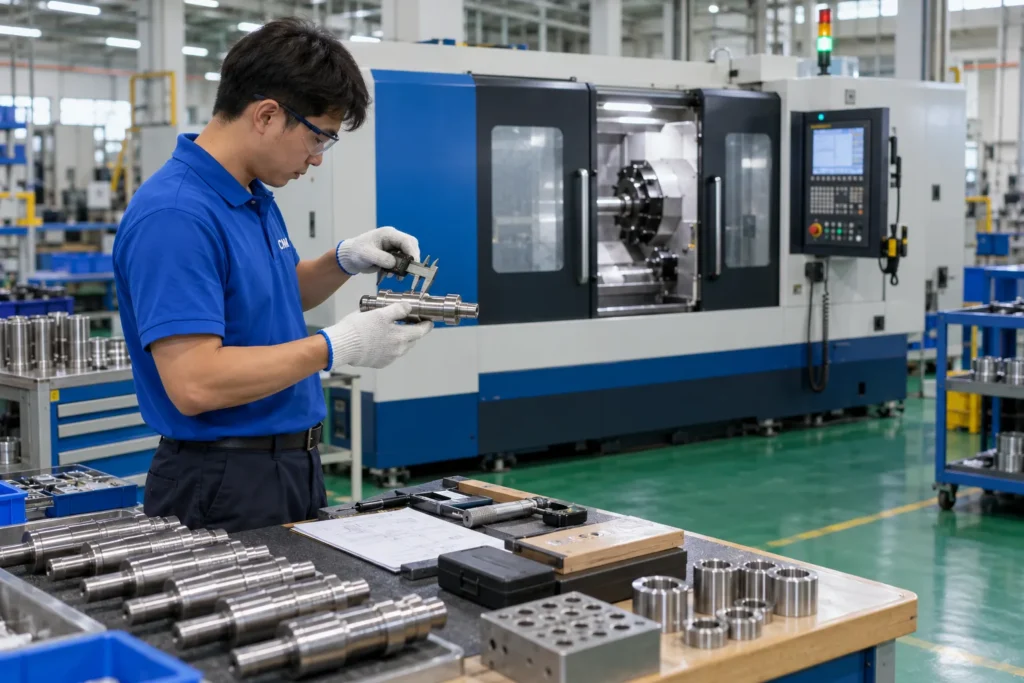
In CNC turning the bar or blank rotates and a stationary tool cuts it. For round parts such as shafts, pins, bushings, spacers, fittings and threaded parts, turning is usually faster than milling, and diameters turned in one clamping stay concentric. In Swiss-type turning a guide bushing supports the bar right next to the tool, so long, slender, small-diameter parts stay straight while they are cut.
Turned parts can also carry flats, cross holes and slots, and can go on to grinding, plating or heat treatment.
Typical turned parts
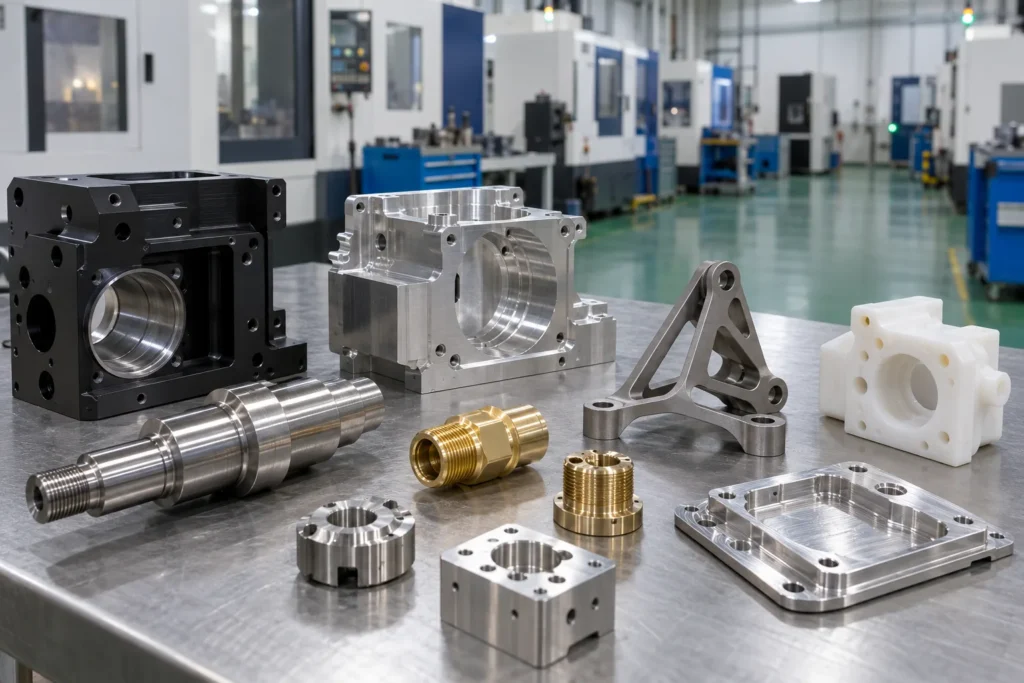
- Shafts, spindles and pins
- Bushings, sleeves and spacers
- Threaded studs and inserts
- Hydraulic and pneumatic fittings
- Small precision parts for electronics and instruments
- Turned parts with milled flats and cross holes
CNC turning at a glance (typical)
| Processes | CNC turning and Swiss-type turning; flats, slots and cross holes milled as a second operation where needed |
|---|---|
| Typical parts | Shafts, pins, bushings, spacers, fittings, threaded parts |
| Features | Diameters, faces, tapers, grooves, threads, knurls |
| Surface roughness | Ra 1.6–3.2 µm as turned; Ra 0.4–0.8 µm by grinding |
| Materials | Aluminum, free-machining and stainless steels, brass, copper, titanium, plastics |
| Secondary | Grinding, thread rolling, heat treatment, plating |
CNC turning FAQ
What is Swiss-type turning?
A turning method where the bar slides through a guide bushing right next to the cutting tool. The support keeps long, slender, small-diameter parts straight while they are cut, which suits small precision parts made from bar in volume.
Can turned parts have milled features?
Yes. Flats, slots, cross holes and off-center holes are made on lathes with driven tools or in a separate milling operation. The route depends on the part and the quantity.